


 Beetle
 T2 Bay
 T2 Split
 T25
 Transporter T4
 Transporter T5
 Golf Mk1
 Golf Mk2


 911
 996
 997
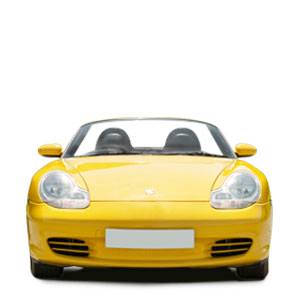 986 Boxster
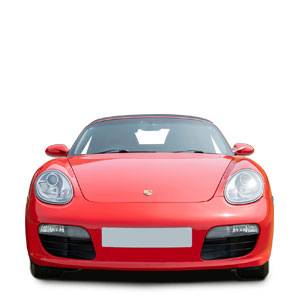 987 Boxster
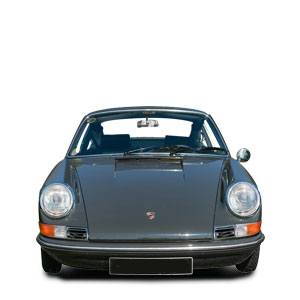 912
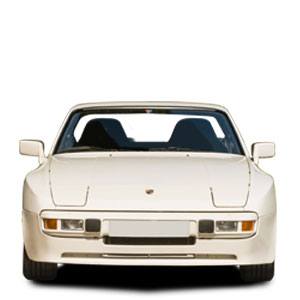 944
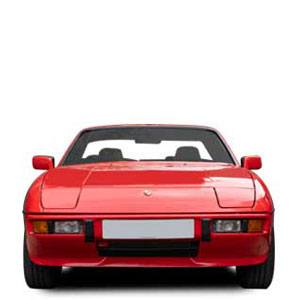 924


 Defender
 Discovery Series 1
 Discovery 2
 Series 1, 2 & 3
 Freelander
 Freelander 2





Whether you've just bought your first air-cooled Porsche, are restoring a barn-find 356 or are trying to verify the originality of a cherished 911, understanding your car's chassis number is one of the most important pieces of detective work you can do.
Today, every road-going Porsche carries a standardised 17-digit VIN (Vehicle Identification Number) that can reveal everything from where the car was built to its model year and production sequence. However, things were quite different before 1981.
Read our blog on Porsche VIN numbers here.
Classic Porsche chassis numbers followed a variety of formats that evolved over the decades, and while they don't offer quite as much detail as modern VINs, they can still tell you a surprising amount about your vehicle.

What is a Porsche chassis number?
Before the term VIN became commonplace, manufacturers used what was generally known as a chassis number or serial number.
For Porsche enthusiasts, the terms chassis number and VIN are often used interchangeably, but before 1981 they used a manufacturer-specific numbering system that identified the model, production series and individual vehicle.
For collectors, restorers and buyers, the chassis number is essential because it can help:
- Confirm the vehicle's identity
- Verify model year and production period
- Check originality against factory records
- Support valuation and provenance
- Identify whether a car is matching numbers
In 1981, vehicle manufacturers around the world adopted the standardised 17-character VIN format still used today, making it easier for manufacturers, governments and insurers to identify vehicles. We have covered this in detail on our blog here.

Where can you find a classic Porsche chassis number?
The location varies depending on model and year, but common locations include:
Porsche 356
- Aluminium identification plate in the front luggage compartment
- Stamped chassis number within the front luggage area
- Factory documentation and Kardex records
Early Porsche 911 and 912
- Stamped panel in the front luggage area
- Aluminium identification plate
- Registration and factory paperwork
Porsche 914
- Identification plate on the body shell
- Stamped chassis number in the luggage compartment area
Porsche 924, 928 and Early 930 Turbo
- Chassis number plate
- Stamped body locations depending on model year
When inspecting a vehicle, the stamped chassis number should always match the identification plate and supporting paperwork.

Porsche 356 chassis numbers explained
| Model Type | Years of Production | Chassis Number Format |
| Early / Gmünd 356 | 1948 -1950 | 2xxx |
| 356 Pre A | 1950 -1955 | xxxxx |
| 356 A T1 Coupe | 1956 -1957 | 55001 - 59090 |
| 356 A T1 Cabriolet | 1956 - 1957 | 61001 - 61700 |
| 356 A T1 Speedster | 1956 -1957 | 81901 - 83691 |
| 356 A T2 Coupe | 1958 -1959 | 100001 - 109000 |
| 356 A T2 Cabriolet | 1958 - 1959 | 150001 - 151400 |
| 356 B T5 Coupe | 1960 - 1961 | 110001 - |
| 356 B T5 Cabriolet | 1960 - 1961 | 88001 - / 152001 - |
| 356 B T6 Coupe | 1962 - 1963 | 117000 - 123000 |
| 356 C | 1964 - 1965 | 700001 - |

Explaining Porsche 911 and 912 chassis numbers up to 1968
During the early years of 911 and 912 production, Porsche continued to assign sequential numbers as cars were built.
These numbers aren't as telling as the later version, so the model year must be identified by comparing against production records.
However, these chassis numbers do still reveal a bit about the car in question. Namely, what the model is and the body style, and also the factory it came from.
- Porsche 911 Coupe begins with 3 xxxxx
- Porsche 911 Targa begins with 5 xxxxx
- Porsche 912 Coupe begins with 35 xxxx
- Porsche 912 Coupe (Karmann built) begins with 45 xxxx
- Porsche 912 Targa begins with 55 xxxx
Please take the following as a guide and consult a suitable owners club or professional for full clarification.
| Model Type | Years of Production | Chassis Number Format |
| Prototype / 901 | 1964 | 300001 - 300048 |
| 901 / 911 (crossover with model change from 901 to 911) | 1964 | 300049 - 300235 |
| 911 Coupe | 1965 | 300236 - 305100 |
| 912 Coupe | 1965 | 350001 - 351970 |
| 912 Coupe (Karmann Built) | 1965 | 450001 - 454470 |
| 911 Coupe | 1966 | 305101 - 308522 |
| 912 Coupe | 1966 | 350001 - 353592 |
| 912 Coupe (Karmann Built) | 1966 | 454471 - 485100 |
| 911 Coupe | 1967 | 305101 - 308522 |
| 911 Targa | 1967 | 500000 - 550718 |
| 912 Coupe | 1967 | 354001 - 355601 |
| 912 Coupe (Karmann Built) | 1967 | 458101- 463204 |
| 912 Targa | 1967 | 550001 - 550544 |

Porsche chassis numbers in 1968
From 1968, Porsche took a more considered approach to chassis numbers, with the following eight-digit structure.
12 3 4 5678
- Digits 1 and 2 are read together to identify the model. 11 would be 911; 12 would be 912.
- Digit 3 is the model year. 8 would identify a 1968 model year.
- Digit 4 identifies the body type. 0 is a Coupe, 1 is a Targa and 2 is a Karmann built Coupe.
- Digits 5,6,7,8 are read as one number to indicate the vehicle's position in production.
Porsche chassis numbers in 1969
In 1969, a further number was added to the Porsche chassis number, making it 9 digits long, with digit 4 now showing engine type on the 911 models.
12 3 4 5 6789
- Digits 1 and 2 are read together to identify the model. 11 would be 911.
- Digit 3 is the model year. 9 would identify a 1969 model year.
- Digit 4 would indicate the engine type fitted to a 911. 1 would be 911T, 2 would be 911E and 3 would be 911S.
- Digit 5 now identifies the body type. 0 is a Coupe, 1 is a Targa, and 2 is a Karmann-built Coupe.
- Digits 6,7,8,9 are read as one number to indicate the vehicle's position in production.
Porsche chassis numbers 1970-1979
The chassis number grew to 10 digits in 1970, with a 9 at the beginning, allowing for the full 3-digit model number to be used.
123 4 5 6789
- Digits 1, 2 and 3 are read together to identify the model. 911, 914, 924, 928 and 930
- Digit 4 is the model year. 0 = 1970, 1 = 1971, 2 = 1972, 3 = 1973, 4 = 1974, 5 = 1975, 6 = 1976, 7 = 1977, 8 = 1978, 9 = 1979.
- Digit 5 would indicate the model variant. 1 would be 911T, 2 would be 911E, and 3 would be 911S. For non-911, this would be 1.
- Digit 6 now identifies the body type. 0 is a Coupe, 1 is a Targa, and 2 is a Karmann-built Coupe.
- Digits 7,8,9,10 are read as one number to indicate the vehicle's position in production.

What's special about Porsche 912E chassis numbers?
The Porsche 912 was a one year only model, offered only in the USA for the 1976 model year.
Powered by a 2000cc VW Type 4 engine, similar to the 914, just over 2000 vehicles were sold in total.
The chassis number logic follows the same as the 10 digit system introduced in 1970.
912 6 XXXXXX
The first 3 digits being the model, the 4th indicating the year (6 in this case) and the remaining indicating its position in production.

How to understand Porsche 914 and 914/6 chassis numbers
The Porsche 914 was internally identified by 'Typ 47' at Volkswagen, and so bears 47 as the first 2 digits of the chassis number.
By contrast, the 914/6 was allocated the Porsche model number 914 as the first three digits of its ten-digit chassis number.
Both the 914 and the 914/6 were built at the Karmann factory in Osnabrück.
As a quick example for the 914.
12 3 45 XXXXX
- Digits 1 and 2 are read together to identify the model, and for the 914 are always 47.
- Digit 3 is the model year. The 914 was launched in September 1969 making the first models '1970' and so this number would be a zero. 0 = 1970, 1 = 1971, 2 = 1972, 3 = 1973, 4 = 1974, 5 = 1975, 6 = 1976
- Digits 4 and 5 are always 29, as that is the VW internal identification code for the Karmann factory.
- Digits 6,7,8,9,10 indicate the vehicle's position within production.
For the 914/6, the chassis number follows the Porsche convention, as per the example below.
123 4 56 XXXX
- Digits 1, 2 and 3 are read together to identify the model, and for the 914/6 this is always 914.
- Digit 4 is the model year. 0 = 1970, 1 = 1971, 2 = 1972
- Digits 5 and 6 are almost always 43, the Porsche internal identification code for the Karmann factory, with the rare exception of the 916 prototype built at Stuttgart, with code 23.
- Digits 7,8,9,10 indicate the position within the production.
| Model Type | Model Year | Chassis Numbers |
| 914 | 1970 | 4702900001 - 4702913312 |
| 914/6 | 1970 | 9140430001 - 9140432668 |
| 916 (prototype) | 1970 | 9142330001 - 9142330020 |
| 914 | 1971 | 4712900001 - 4712916231 |
| 914/6 | 1971 | 9141430001 - 9141430443 |
| 914 | 1972 | 4722900140 - 4722921580 |
| 914/6 | 1972 | 9142430001 - 9142430240 |
| 914 | 1973 | 4732900001 - 4732927660 |
| 914 | 1974 | 4742900001 - 4742921370 |
| 914 | 1975 | 4752900001 - 4752911368 |
| 914 | 1976 | 4762900001 - 4762904100 |

How do Porsche 924 chassis numbers work?
Introduced in 1976, the Porsche 924 was another model designed in collaboration with Volkswagen, but as with the 914, Porsche was left to take it to market after VW pulled out of the deal at the 11th hour. Whilst they were built at Audi's Neckarsulm factory, the VIN still identified the model and production sequence in a Porsche-specific format.
123 4 5 XXXXX
- Digits 1, 2 and 3 are read together to identify the model and are always 924.
- Digit 4 denotes the vehicle model year. 6 = 1976, 7 = 1977, 8 = 1978, 9 = 1979, 0 = 1980.
- Digit 5 indicates the target market for the vehicle. 1 = Europe / Rest of World (including LHD + RHD UK spec), 2 = USA / Canada, 3 = Japan.
- Digits 6,7,8,9,10 mark the position within the production run.
From 1981, the Porsche 924 followed the later VIN configuration of chassis number. As covered in our blog here.

Decoding the Porsche 928 chassis number
The first Porsche 928 production started in 1977, for release in September as a 1978 model. The UK got the first RHD 928 models in February 1978.
The chassis number follows a similar pattern to the others, although with the additional digit indicating the body type, hinting that the Cabriolet prototype may have been closer than we think to production. The 928 chassis number can be read like this.
123 4 5 6 XXXX
- Digits 1, 2 and 3 are read together to identify the model and are always 928.
- Digit 4 is the model year. 8 = 1978, 9 = 1979, A = 1980 (an early nod to the lettering system that followed in 1981).
- Digit 5 indicates the target market for the vehicle. 1 = Europe / Rest of World (including LHD + RHD UK spec), 2 = USA / Canada
- Digit 6 indicates the body style, which is always 0 for Coupe.
- Digits 7,8,9,10 mark the position within the production run.

What to do next?
If this article on Porsche chassis numbers has piqued your interest in the history of your vehicle or model type, then you may want to try and find out more.
A great source of information is a Porsche owners club, and you may find something local to you by checking our Club Hub here.
Alternatively, a national club, such as Porsche Club GB will hold more detailed records and also has breakaway model-specific registers, headed up by experts in the vehicle you own.
We hope this information was useful to you. Should you have further questions, please email our team help@heritagepartscentre.com
Andy